Structure
How PGEU Operates
The PGEU has a Secretariat located in Brussels with a staff of five people who coordinates the daily work of the association. The PGEU holds a General Assembly two times per year (June and November) to which all members and observer members are invited to participate. PGEU holds an Annual Symposium which takes place immediately after or before the June General Assembly. The PGEU has a management board known as the Executive Committee whose members are representatives of PGEU member organisations.
The Presidency of the PGEU changes on an annual basis by the way of a rotation system among members. To facilitate the work of the PGEU in giving advice and formulating proposals in many different policy areas relevant to community pharmacy and public health, a number of PGEU Working Groups have been established.
General Assembly
The General Assembly is the supreme body of the association which decides on all important matters including PGEU policy decisions and the annual budget. The General Assembly meets two times per year and all ordinary members and observer members delegations attend. Policy proposals are developed by the Working Groups in collaboration with the Secretariat, and the Executive Committee presents policy proposals to the General Assembly with its recommendations for action.
PGEU Annual Conference
PGEU holds an annual conference every year the day before/after the June General Assembly. The annual conference features expert speakers from the world of pharmacy, the European institutions, national authorities, academia and patient groups.
Executive Committee :
- Meets on a monthly basis.
- Assists the Secretary General in managing the association and implementing the resolutions of the General Assembly.
- Examines policy proposals developed by the Working Groups in collaboration with the Secretariat and presents the proposals and the Committee's recommendations for action to the General Assembly.
- The chair of the Executive Committee is the President.
The 9 countries forming the Executive Committee in 2026 are Germany, Croatia, Czechia, Spain, Greece, Ireland, Estonia, Portugal and Poland.
Presidency
The President is elected by the national delegations.
President : Dr. Mikołaj Konstanty (Poland) is PGEU President for 2026.
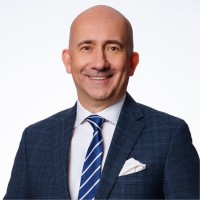
Dr. Mikołaj Konstanty is a pharmacist with over 20 years of experience in community pharmacy practice. He graduated from the Silesian Medical University, where he obtained his Doctor of Pharmacy degree.
He is the co-owner of a community pharmacy in Poland, where he works alongside his wife, maintaining an active role in day-to-day pharmacy practice. In addition to his professional practice, Dr. Konstanty has been involved in pharmaceutical education as a tutor, contributing to the training of future pharmacists.
Dr. Konstanty has held several leadership positions within the Polish pharmacy sector. Since 2019, he has served as President of the Silesian District Pharmaceutical Chamber, and since 2024, he has been Vice-President of the Polish Pharmaceutical Chamber.
At the European level, Dr. Konstanty has been actively engaged in professional representation and policy discussions. He was elected President of the Pharmaceutical Group of the European Union (PGEU) for 2026, where he represents community pharmacists and contributes to the development of pharmacy policy across Europe.
Ly Rootslane (Estonia) is PGEU Vice-President for 2026.
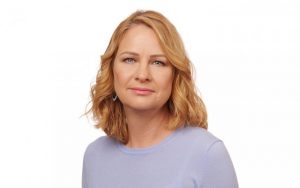
Ly Rootslane is a pharmacist with extensive experience in community pharmacy and professional representation. She graduated in pharmacy from the University of Tartu and has been actively involved in the Estonian pharmacy sector for many years.
She currently serves as the Secretary General of the Estonian Pharmacies Association, where she represents the interests of community pharmacies and is involved in national-level discussions on healthcare and pharmaceutical policy.
In addition to her national role, Ly Rootslane has been engaged in European-level professional activities. She was elected Vice-President of the Pharmaceutical Group of the European Union (PGEU) for 2026, contributing to the representation of community pharmacists and to policy discussions at EU level.
Throughout her career, she has focused on strengthening the role of community pharmacies within healthcare systems and supporting the development of the pharmacy profession.
Treasurer : Jesús Aguilar Santamaría (Spain) is PGEU Treasurer.
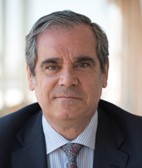
Jesús Aguilar Santamaría was born in Burgos and, although he had no family background, he soon felt a strong vocation for pharmacy which, over time, he completed with a solid commitment to public service. The result is a solid expertise, which adds a broad knowledge of the pharmaceutical industry as well as the reality of community pharmacy.
His broad vision of pharmacy, as a reflection of his professional experience and his concern to identify problems and suggest effective solutions, converge in the representative positions he held in the pharmaceutical field for over a decade. Thus, between 2008 and 2015 he was President of the Burgos Pharmacists Chamber and President Regional Pharmaceutical Council of Castile and León. In addition, between 2009 and 2015, he was Vice-President of the General Pharmaceutical Council of Spain.
He was eventually elected in May 2015 President of the General Pharmaceutical Council of Spain, and re-elected for that position in May 2018). As the President of the Spanish Pharmacists he is currently conducting a profound renovation of both the entity and the profession.
Working Groups
The PGEU has to give advice and formulate proposals in many different policy areas relevant to community pharmacy and public health. To facilitate this work, the Executive Committee or the General Assembly can propose the establishment of a working group to deal with specific issues. The working group members are experts appointed by PGEU members. The working groups provide additional technical expertise to the Secretariat in developing policy proposals, which are then presented by the Executive Committee to the General Assembly for approval. The following working groups are currently active:
- Advisory Working Group (AWG) : The AWG is the main consultative body of the PGEU, covering a wide range of policy areas and is currently the key forum for discussion and development of PGEU policy papers.
- European Pharmacists' Professional Forum (EPPF) : The European Pharmacists' Professional Forum deals with professional issues, including issues related to mobility of pharmacists, mutual recognition of professional qualifications, education and training of pharmacists, patient safety, pharmacy practice, collaboration with other stakeholders, etc.
- Economics Working Group (EWG): The EWG deals with current economic issues and with latest developments in health policy and health economics affecting community pharmacies. These include trends related to fiscal sustainability of health systems, strengthening of primary care services, pricing and reimbursement policies, health technology assessment, digitalization in healthcare.
About Us